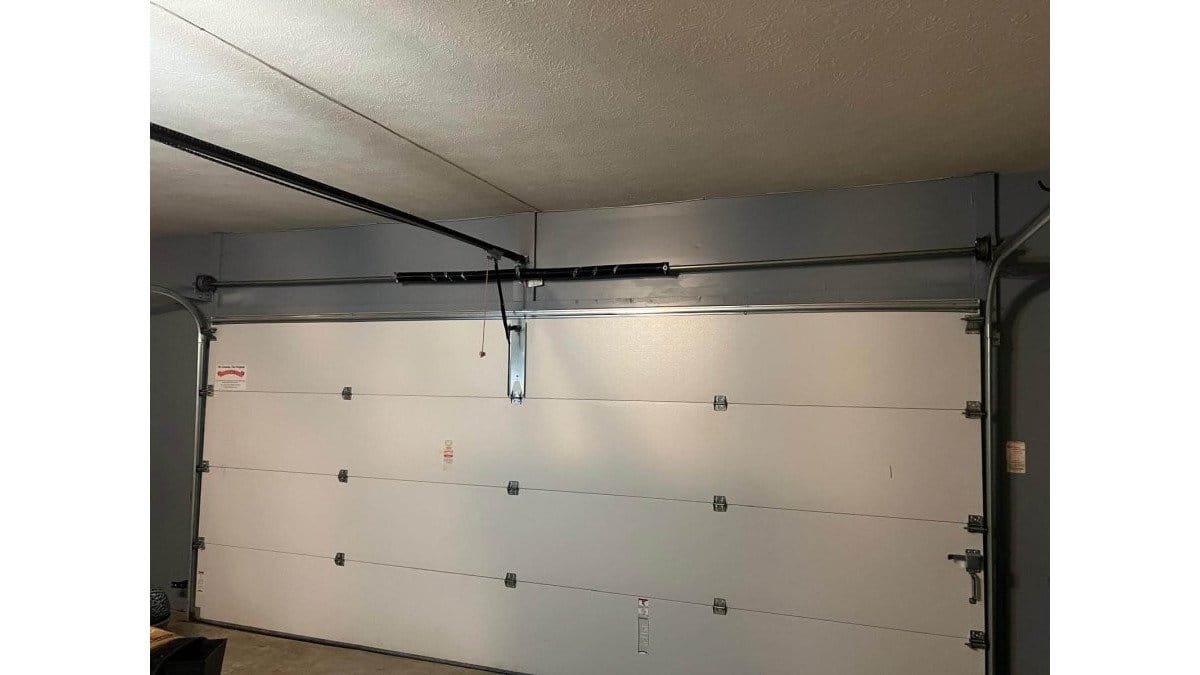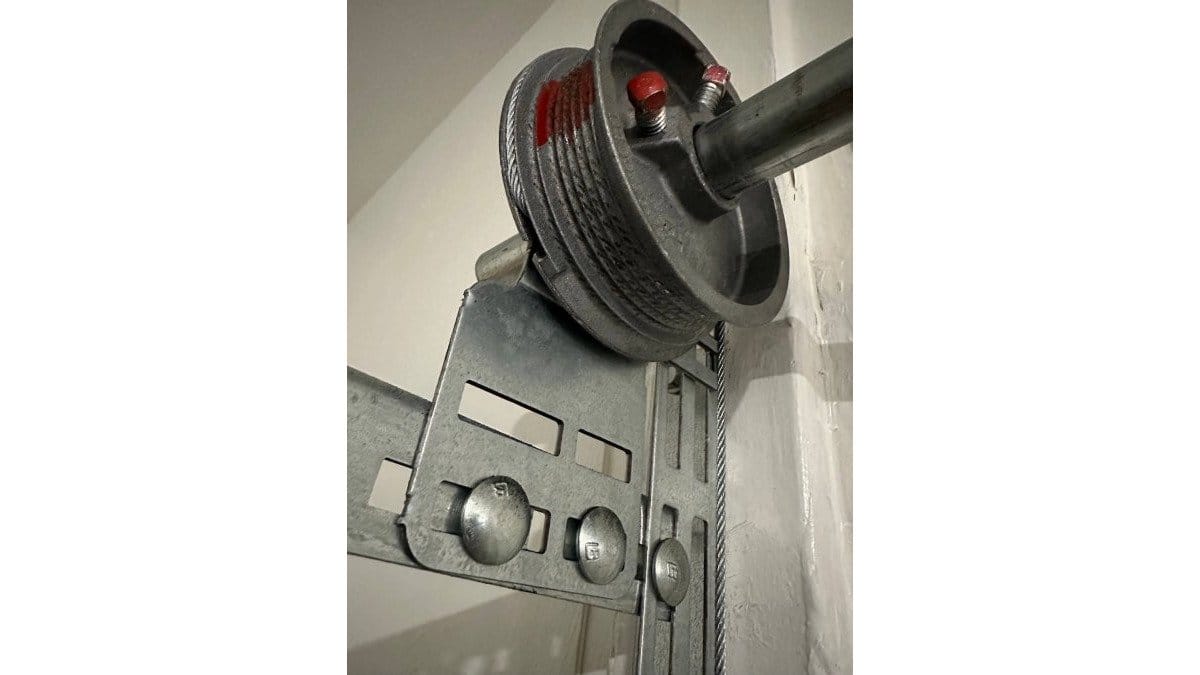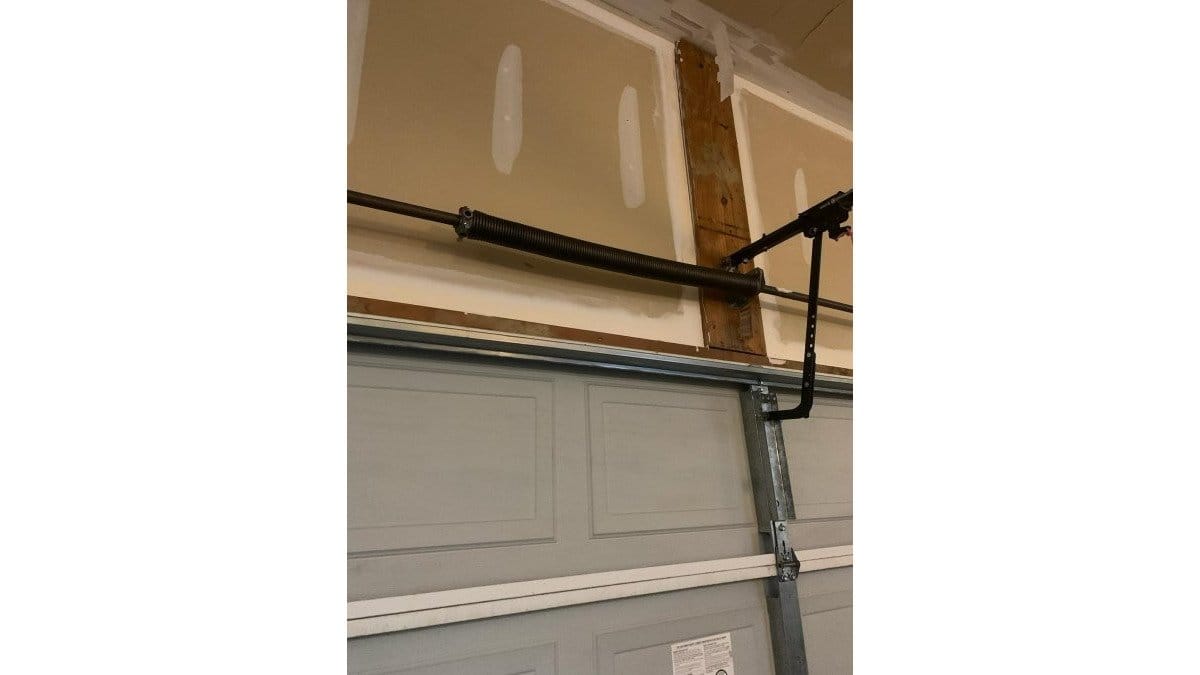
Last Updated: October 24, 2026
Quick Summary
To get your garage door fixed fast, start by checking simple issues like dead remote batteries, power supply, and sensor alignment before calling for service. Most repairs cost between $150 and $350, and professional shops offering same-day service with parts stocked on the truck can often complete the work in a single visit.
- Broken torsion springs, damaged openers, and misaligned sensors are the most common garage door failures.
- Never attempt to repair torsion springs yourself due to extreme tension that can cause serious injury or death.
- Misaligned sensors are one of the few problems homeowners can safely fix by loosening the bracket and aiming it at the opposite sensor.
- Ask for a written estimate with parts and labor separated before work begins, and verify the technician is insured.
- A door under 10 years old with a single failed part should be repaired; replacement becomes cost-effective after 15 years with recurring failures or visible deterioration.
Table of Contents
- Common Reasons Your Garage Door Needs Repair
- What to Check Before Calling for Service
- Troubleshooting a Garage Door Stuck Closed
- Diagnosing Garage Door Sensor Misalignment
- Repair vs. Replacement: Making the Right Choice
- Questions to Ask When Booking Your Garage Door Repair Appointment
- Getting Your Garage Door Fixed Today
- Frequently Asked Questions
Common Reasons Your Garage Door Needs Repair
When your garage door won’t open or close properly and needs to be garage door fixed, it can disrupt your entire day.
The most frequent culprits are broken springs, damaged openers, and misaligned sensors. Learn more about garage door spring repair and why professional service is essential for this work.
Not all garage door issues require professional repair. Some you can troubleshoot yourself safely; others demand immediate expert attention because they pose genuine safety risks. Knowing the difference saves time, money, and potential injury.
The Door & Access Systems Manufacturers Association’s consumer safety guidance warns that certain repairs, especially spring work, should never be DIY projects. Springs store enormous tension and can cause serious injury if mishandled.
The most frequent garage door problems fall into a few categories, each with distinct causes.
Problem | Cause | What Happens |
|---|---|---|
Broken springs | Normal wear from daily use | Door won’t budge or drops suddenly |
Damaged opener | Wear from repeated cycles | Door won’t respond to remote or button |
Misaligned sensors | Vibrations or bumps shift position | Door reverses or won’t close |
Worn rollers | Friction over time | Grinding noise during movement |
Frayed cables | Tension and age | Door movement becomes jerky or stops |
Unresponsive keypad | Electrical wear | Keypad commands don’t register |
What to Check Before Calling for Service
Before you pick up the phone, run a quick diagnostic. Start with the obvious: Is the door actually stuck, or did the remote batteries die? Replace them and try again.
Next, inspect the tracks on both sides where the door rolls. Debris, dents, or bent sections block smooth movement.
Listen to how the door moves. A grinding noise suggests worn rollers or damaged opener gears.
If the door opens partway then stops, the opener motor might be failing. Pull the manual release cord (the red handle) and try lifting the door by hand. If it moves easily, the opener needs repair.
Watch out: Never attempt to repair or adjust torsion springs yourself. The tension in these springs is extreme and can cause serious injury or death. Even a small mistake during adjustment can be catastrophic.
Troubleshooting a Garage Door Stuck Closed
When your garage door won’t open, stay calm and work through this systematically.
First, check the photo eye sensors near the bottom of the door frame. These safety sensors stop the door from closing on people or objects.
Inspect the remote. Replace the batteries first, then try the wall-mounted button inside the garage. If the wall button works but the remote doesn’t, the remote needs batteries or repair.
Check the opener’s power supply. Make sure it’s plugged in and the outlet has power. Flip the breaker switch off and back on.
If your door is stuck closed and you need your vehicle immediately, use the manual release.
Never force a stuck door. Pushing too hard can damage the tracks, bend the frame, or injure your hands. If manual lifting doesn’t work, professional help is your safest option.
Diagnosing Garage Door Sensor Misalignment
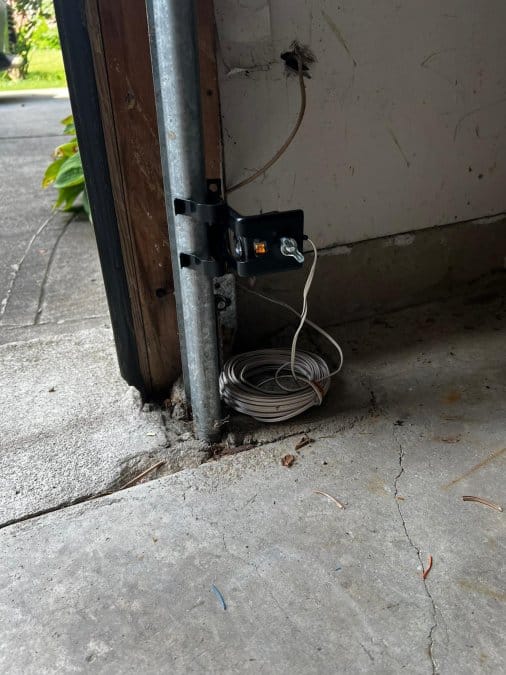
Garage door sensors are small but critical. These photoelectric eyes sit on opposite sides of the door frame near the bottom. One emits an invisible beam; the other receives it.
Misalignment happens when vibrations shift the sensors slightly out of position. Even a quarter-inch deviation can break the beam.
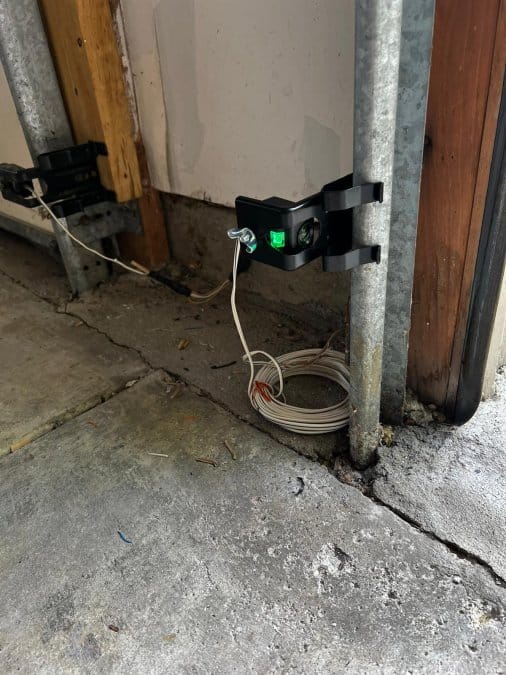 |  |
|---|
Garage door spring replaced
Check the indicator lights on each sensor. A solid green light means the sensor is powered and working.
Loosen the mounting bracket slightly, just enough to pivot the sensor. Aim it directly at the opposite sensor. Tighten the bracket back down. Test the door. If it closes smoothly, alignment is restored.
Misaligned sensors are one of the few garage door problems homeowners can safely fix without tools or expertise. Most other issues require professional attention.
Repair vs. Replacement: Making the Right Choice
This decision comes down to four factors: the age of the door, the scope of the current failure, how often problems recur, and the condition of the door itself. Score each factor, because the answer is rarely a single number.
Factor 1: Age relative to service life. A well-maintained steel door commonly lasts 15 to 20 years; a wood door often needs more attention sooner. Under 10 years old with a first real failure, repair almost always wins.
Factor 2: Scope of the current failure. A single worn part is a repair. A cluster of failures in the same system is a signal. Use this rough triage:
- One moving part failed (a torsion spring, a cable, a roller set, a sensor): repair.
- Two or more parts failed at once, or a failure damaged the track or panel: get a written assessment before deciding, because the repair bill can approach replacement territory.
- The opener motor or control board has failed on a door that is otherwise sound: replacing the opener alone is usually the right call; the door itself does not need to go.
- The door is off track and the track or frame is bent: this is a structural question, not a parts question, and needs an on-site evaluation.
Factor 3: Repair frequency. One broken spring is normal maintenance. Three separate service calls in 12 months is a pattern. Track your last two years of repairs; if the total is climbing, the door is telling you something.
Factor 4: Condition of the door itself. Walk the door and check for these, because they change the math:
- Dents, creases, or bent sections in the panels
- Rust that has spread beyond a small spot
- Rot or soft spots in wood sections
- Sagging or a door that no longer sits level
- Gaps at the sides or bottom that let in daylight and weather
Cosmetic wear on a young door is not a replacement trigger. Rust that is spreading, rot that is accelerating, or a door that no longer sits square are deterioration signs that repairs will not stop.
Putting it together. If the door is under 10 years old, repair. If it is 10 to 15 years old, repair unless two or more of these are true: the failure is structural, repairs are recurring, the panels are deteriorating, or the door no longer sits level. If it is over 15 years old and any two are true, replacement is usually the more cost-effective path.
One more consideration: a door that is hard to lift by hand after you pull the manual release is a spring or balance problem, not a door problem. That is a repair, not a replacement, and it should be handled by a professional because of the tension stored in the springs.
For help evaluating your specific situation, you can review local pricing and repair estimates to understand what repair versus replacement actually costs in your area.
Questions to Ask When Booking Your Garage Door Repair Appointment
The technician you hire determines whether the job is done right the first time.
1. What is your response window, and is after-hours service extra? Same-day service matters when your door is stuck.
2. Will I get a written, fixed price before work starts? Ask for the estimate in writing, with parts and labor broken out separately.
3. Do you stock common parts on the truck? This determines whether the job finishes in one visit or stretches across several.
4. What are your parts and labor warranties, in writing? Ask about them separately, because they are different promises.
5. Are you insured, and can I see proof? Ask for a certificate of general liability insurance before work begins.
6. Who actually shows up, and are they background-checked? Ask whether the person arriving is an employee or a subcontractor, and whether the company runs background checks.
**7.
Red flags to watch for:
- A price quoted over the phone without seeing the door, then raised on site
- Pressure to approve a full replacement before any diagnosis
- No written estimate, no written warranty, or no proof of insurance
- A technician who wants to start work before you have approved a price
- Anyone who offers to adjust or repair torsion springs as a quick add-on without explaining the safety risk
Can I book online? Modern repair shops offer simple online booking, which shows they are organized and customer-focused. You can book your appointment directly to confirm availability and lock in your service time.
Getting Your Garage Door Fixed Today
A broken garage door disrupts your routine and creates security concerns. The faster it’s repaired, the sooner you regain access and peace of mind.
Garage Door Pro serves Carmel, Westfield, Zionsville, Fishers, Noblesville, and the greater Indianapolis region with same-day repair service. Our team operates 24/7, so whether your door fails at 9 AM or 9 PM, we can respond.
Our veteran-owned business has earned an A+ rating with the Better Business Bureau through years of reliable service. We handle the parts warranty directly, so you’re not caught between a technician and a parts supplier.
Don’t wait for a garage door problem to worsen. Get a free quote today and schedule your repair. We’ll diagnose the issue, give you an honest assessment of repair versus replacement, and get your door working again, often the same day you call.
Frequently Asked Questions
What should I check before calling for garage door repair?
Start with the simple fixes: check that both sensors are aligned and clean of debris, verify the remote has fresh batteries, and ensure nothing is blocking the door’s path. Look for obvious damage like bent tracks or visible cable wear. If the door won’t respond at all, check that the opener is plugged in and the circuit breaker hasn’t tripped. These steps often reveal the problem and can save you a service call.
How can I tell if my garage door sensors are misaligned?
Misaligned sensors are a common reason garage doors reverse or won’t close. Look at the small LED lights on each sensor—they should both be solid green or red. If one light is blinking or off, the sensors aren’t communicating. Check that nothing is blocking the beam between them and gently clean the sensor lens with a soft cloth. If the lights still don’t match after cleaning, the sensors need professional adjustment.
Is it safe to try fixing a garage door myself?
Some troubleshooting is safe, like checking sensors and cleaning tracks. However, never attempt to repair springs, cables, or the opener yourself. Garage door springs are under extreme tension and can cause serious injury. Cables can snap unexpectedly. If the door is stuck or won’t operate, call a professional technician. A professional repair can address the issue safely and efficiently.
How much does garage door repair typically cost?
Repair costs depend on what’s broken. According to HomeGuide, typical garage door repair costs range from $150 to $350, though emergency or after-hours service may be higher. The exact price depends on whether you need spring replacement, opener repair, cable work, or sensor adjustment. Contact a local technician for a free estimate—most provide fixed pricing before work begins so there are no surprises.
A stuck or broken garage door stops your day cold. Professional repair restores function quickly and safely. Garage Door Pro provides same-day service across Carmel and surrounding areas with transparent pricing, skilled technicians, and parts warranty included. Contact us for a free estimate and same-day availability.