
Table of Contents
- Common Causes of Garage Door Noise and How to Identify Them
- Worn-Out Rollers and Hinges: The Most Common Source of Noise
- Lubrication and Maintenance: Stopping Metal-on-Metal Grinding
- Misaligned Tracks, Loose Hardware, and Unbalanced Doors
- Signs of Failing Garage Door Springs You Should Never Ignore
- Belt Drive vs Chain Drive Garage Door Openers: Which Runs Quieter?
- Your Garage Door Maintenance Checklist for a Quieter Door
- When to Call a Professional for Noisy Garage Door Repairs
- Frequently Asked Questions
Last Updated: September 15, 2026
Common Causes of Garage Door Noise and How to Identify Them
If you’re wondering why is my garage door making loud noises, the answer almost always comes down to friction, worn parts, or loose hardware. At Garage Door Pro, we’ve handled thousands of service calls across Carmel, Indiana, and the same culprits show up again and again: dry rollers, misaligned tracks, and springs that are past their prime.
The good news is that most noise problems are fixable. The better news is that the sound itself tells you where to look.
Match the Sound to the Problem
Different noises point to different failures. A screech usually means metal grinding on metal without lubrication. A rattle suggests loose bolts or fasteners. A popping sound often signals a torsion spring issue. If you hear a loud bang, stop using the door immediately and call a professional.
Sound | Likely Cause | Urgency |
|---|---|---|
Screeching | Lack of lubrication on rollers or hinges | Low |
Grinding | Worn rollers or misaligned tracks | Medium |
Rattling | Loose hardware or fasteners | Low |
Popping | Torsion spring binding or failing | High |
Loud bang | Broken spring | Emergency |
The U.S. Consumer Product Safety Commission notes that garage door systems operate under extreme tension and should be serviced by qualified technicians when springs or cables are involved.
Worn-Out Rollers and Hinges: The Most Common Source of Noise
Worn-out rollers and hinges are the single most common reason a garage door gets loud. Rollers ride inside the track and take a beating every time the door opens. After years of use, the bearings wear down, the nylon coating peels, and metal starts hitting metal.
Hinges wear too. They connect door panels and flex with every cycle. A hinge that’s lost its pin or bent out of shape will rattle and squeak.
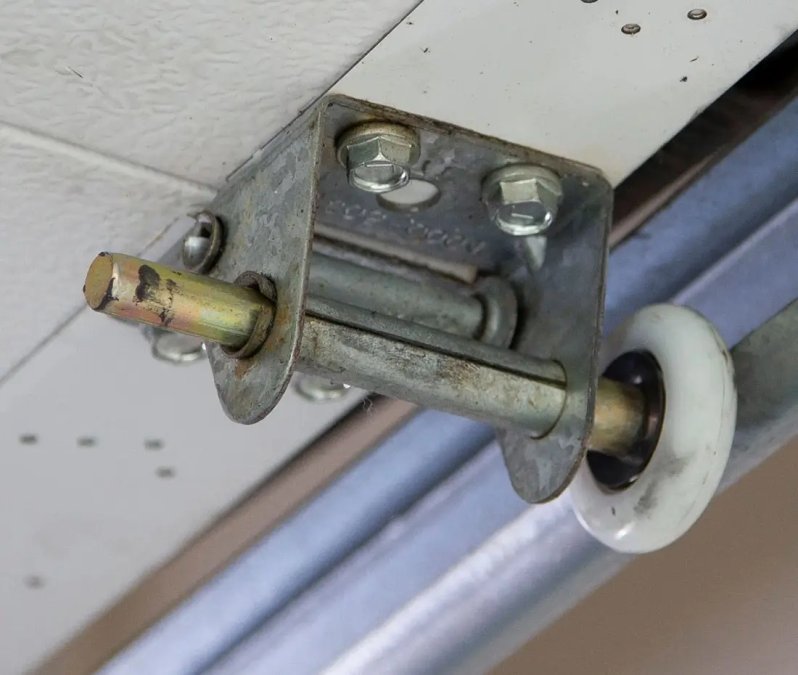
What to look for:
- Rollers that wobble or won’t spin freely
- Cracked or missing nylon sleeves
- Hinges with visible rust or bent metal
- Black residue on the track (a sign of grinding)
Replacing rollers is one of the common fixes in garage door repair.
Lubrication and Maintenance: Stopping Metal-on-Metal Grinding
Lubrication is the easiest preventive step you can take, and most homeowners skip it entirely. A dry garage door will grind, screech, and wear out parts faster than one that gets a quick tune-up twice a year. The reason is simple: every roller bearing, hinge pin, and spring coil is a metal-on-metal contact point, and without a film of lubricant between those surfaces, friction turns into noise and noise turns into premature wear.
What to use, and what not to use:
- White lithium grease, best for hinge pivot points, bearing plates, and the opener carriage. It clings to metal and resists being flung off.
- Silicone-based spray, best for roller bearings and stems, and safe on nylon rollers. It won’t attract dust the way oil-based products do.
- Avoid WD-40 as a long-term lubricant. It’s a solvent, not a grease, and it evaporates within days, leaving the metal drier than before.
- Avoid heavy motor oil or axle grease. They collect grit, which turns into an abrasive paste inside the roller bearing.
Step-by-step lubrication guide:
- Close the door and disconnect the opener. Pull the emergency release cord so the door won’t move if someone hits the wall button.
- Wipe down the tracks first. A dry rag removes the black residue that builds up from grinding rollers. Don’t lubricate the track itself, the rollers should roll, not slide.
- Apply lubricant to the roller bearings and stems. A short burst on each of the 10 to 12 rollers is enough. Wipe off any excess.
- Lubricate every hinge pivot point. There are typically 8 to 12 hinges on a standard 7-foot door. One drop or a short spray at each pivot.
- Coat the torsion springs lightly. Run a rag with a thin film of white lithium grease along the coil. Do not spray heavily, excess grease drips onto the door and the floor.
- Lubricate the bearing plates at each end of the torsion tube.
- Grease the opener carriage and rail. Use white lithium grease on the rail, not silicone, so it stays put.
- Cycle the door up and down two or three times and listen. Most of the screech and grind should be gone.
Seasonal maintenance schedule for US homeowners:
Season | Task | Why it matters |
|---|---|---|
Spring | Full lubrication, tighten hardware, test balance | Winter cold has dried out lubricant and shrunk metal |
Summer | Inspect rollers and tracks, clear debris | Heat expands metal and can cause binding |
Fall | Full lubrication before first freeze | Cold snaps dry out metal fast, a door quiet in October can screech by December |
Winter | Visual inspection, listen for new sounds | Road salt and grit get tracked into the tracks |
If you’d rather not climb a ladder, routine maintenance visits cover all of this plus a full safety inspection, including the spring, cable, and sensor checks that are easy to miss from the ground.
Misaligned Tracks, Loose Hardware, and Unbalanced Doors
Tracks that are bent, dented, or out of alignment force rollers to bind. The result is a grinding or scraping sound that gets worse over time. A misaligned track also puts stress on the opener, which shortens its life.
Loose hardware is just as common. Vibration from daily use works bolts and fasteners loose. A quick pass with a socket wrench can silence a rattling door in minutes.
An unbalanced door is a bigger problem. If one side lifts higher than the other, or if the door drifts down when you release it halfway, the springs are no longer doing their job evenly. That imbalance strains the opener and creates uneven wear.
Quick hardware check:
- Tighten all hinge bolts
- Check track brackets for looseness
- Inspect bearing plates for wear
- Test door balance by hand
Signs of Failing Garage Door Springs You Should Never Ignore
A failing spring is not a noise problem you can lubricate away. It’s a safety issue. Torsion springs and extension springs store enormous energy, and when they fail, they fail violently.
Warning signs:
- A loud popping or snapping sound
- Visible gap in the torsion spring coil
- Door feels extremely heavy when lifted manually
- Door opens a few inches and stops
- Cables hanging loose on one side
If you see any of these, stop operating the door and call a professional.
Belt Drive vs Chain Drive Garage Door Openers: Which Runs Quieter?
How each drive actually works:
Comparison at a glance:
Feature | Belt Drive | Chain Drive | Screw Drive |
|---|---|---|---|
Noise level | Quietest | Loudest | Middle |
Durability | Good | Excellent | Good |
Cold-weather performance | Belt can stiffen | Reliable | Best |
Maintenance | Low | Moderate, needs periodic lubrication | Low |
Best for | Attached garages, bedrooms above | Detached garages, heavy doors | Cold climates |
The smart-opener angle most guides miss:
Quick opener-noise troubleshooting:
Your Garage Door Maintenance Checklist for a Quieter Door
When to Call a Professional for Noisy Garage Door Repairs
Frequently Asked Questions
How do you fix a noisy garage door?
Start by identifying the sound. Squealing usually points to dry rollers or hinges, so apply a silicone-based spray to each roller, hinge, and bearing plate. Grinding suggests track misalignment or worn rollers, which may need replacement. Rattling often means loose fasteners that need tightening. If the noise continues after lubrication and tightening, the issue is likely worn rollers, failing springs, or opener drive tension, and a professional inspection is the safest next step.
What does a broken garage door spring sound like?
A broken torsion spring makes a loud bang, similar to a gunshot, followed by the door becoming extremely heavy or refusing to open. Extension springs often snap with a sharp pop. After the bang, you may hear the door groan or strain when the opener tries to lift it. If you hear this, stop using the door immediately and call a professional, because operating a door with a broken spring can damage the opener and cause injury.
Is a loud garage door a safety hazard?
Sometimes. Noise from dry rollers or loose hardware is usually an annoyance, not an immediate danger. But loud popping, grinding, or banging can signal failing springs, misaligned tracks, or worn cables, all of which can cause the door to fall or derail. If the noise started suddenly, sounds like metal snapping, or comes with a door that opens unevenly, treat it as a safety issue and schedule a professional inspection before using the door again.
How often should I lubricate my garage door tracks?
Lubricate the rollers, hinges, and bearing plates every six months, and more often if you use the door several times a day. Use a silicone-based spray rather than grease, which attracts dirt and grit. Do not lubricate the tracks themselves; they should stay clean and dry so the rollers can roll freely. Wipe the tracks with a damp cloth to remove debris, then lubricate the moving metal parts. This routine keeps grinding and squealing to a minimum.