
Table of Contents
- 24-Hour Residential Garage Door Repair in Carmel: How Emergency Service Works
- Emergency Garage Door Opener Repair: When the Motor Quits at Midnight
- Common Causes of Garage Door Sensor Misalignment
- Garage Door Torsion Spring Replacement in Carmel: Why It Can’t Wait
- Your Garage Door Maintenance Checklist for Fewer Emergency Calls
- What to Expect From a 24-Hour Garage Door Repair Visit
- Conclusion
- Frequently Asked Questions
Last Updated: October 4, 2026
24-Hour Residential Garage Door Repair in Carmel: How Emergency Service Works
A garage door that fails at 11 p.m. leaves your home open to the street until morning. That is why 24-hour residential garage door repair exists: a dispatcher answers, a technician rolls, and the door gets secured the same night.
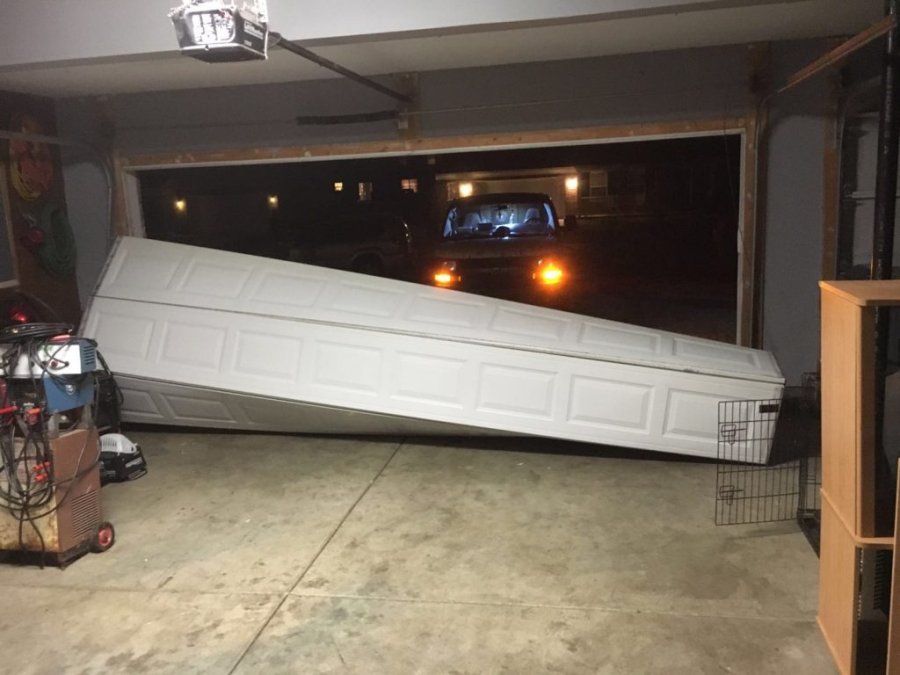
Garage door off its track and collapsed at night
Here is how a real emergency call unfolds, what counts as urgent, and what to do with your door in the meantime.
What Counts as a Garage Door Emergency
A garage door emergency is any failure that leaves your home unsecured, traps your vehicle, or creates a safety risk. Not every malfunction qualifies.
Call immediately when:
- A torsion spring snaps with a loud bang and the door will not lift
- The door is stuck half-open and will not budge
- A cable has snapped or is hanging loose on one side
A slow-closing door, a noisy roller, or a remote that needs reprogramming can usually wait. A door hanging crooked with a broken cable cannot.
How to Secure Your Garage Until the Technician Arrives
Disconnect the opener first. Pull the red emergency release cord so the door is no longer under motor control. If the door is fully closed, leave it closed and lock the deadbolt.
If the door is stuck open, do not force it down. A door with a broken spring or cable can weigh well over a hundred pounds and can drop without warning.
Emergency Garage Door Opener Repair: When the Motor Quits at Midnight
Emergency garage door opener repair starts with quick checks that cost nothing and sometimes save the call. Openers fail for boring reasons as often as dramatic ones, but the other half is knowing what is safe to touch at midnight and what should wait for a technician.
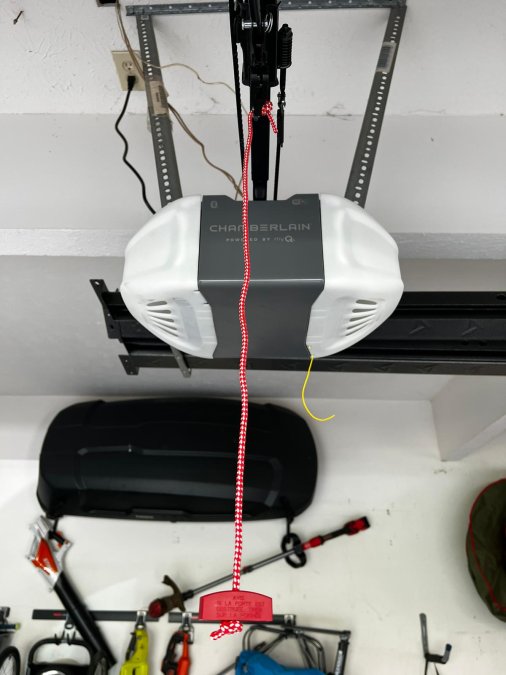
Quick Checks Before You Call
Work through this list before you dial:
- Check the wall outlet. A tripped GFCI or a bumped plug kills power to the opener.
- Look for a blinking light on the motor unit. Most openers flash a diagnostic code that maps to a specific failure in the owner’s manual.
- Test the wall button. If it works but the remote does not, the problem is the remote or its battery.
- Check the safety sensors at the bottom of the tracks. If the indicator light is off or blinking, the door will not close, the most common reason a door refuses to close at night.
If the motor hums but nothing moves, or the unit is completely dead after these checks, you need a technician. Belt and chain openers both fail this way, and the fix usually means a new motor or a stripped gear assembly.
What Is Safe to Touch at Midnight, and What Is Not
When your opener quits at midnight, the temptation is to start pulling things apart. Here is the line between a homeowner fix and a technician job:
Safe for you to do:
- Reset a tripped GFCI or breaker
- Replace a remote battery
- Wipe sensor lenses with a dry cloth
Not safe, call a technician:
- Anything involving the torsion spring, cables, or drums. These store enormous energy, and a snapped cable can whip with enough force to cause serious injury.
- Removing the opener’s cover to inspect the gear assembly. The unit holds tension and sharp metal edges.
- Forcing a door that is off its tracks back into place. A door that has jumped the track can fall without warning.
How to Describe the Problem So the Dispatcher Sends the Right Tech
A 30-second, specific phone call gets a better outcome than a vague one. Instead of “my opener is broken,” say:
- “The wall button works but the remote does not.” (Remote or receiver issue.)
- “The motor hums for two seconds, then stops, and the door does not move.” (Likely stripped gear or a bound door.)
- “The door goes up fine but reverses immediately when I try to close it.” (Sensor or force-limit issue.)
That last one changes the visit from a tune-up to a same-night spring replacement. Garage Door Pro keeps belt and chain opener parts and torsion springs on every truck, so the technician who arrives for a humming motor can also handle a failed spring.
When the Opener Is Fine but the Door Is Not
A surprising share of “opener failures” are actually door failures. The opener is doing its job, the door is too heavy or too bound up to move. Signs the opener is innocent:
- The motor runs smoothly for a second or two, then the door stalls or the opener shuts off on overload.
- The door moves a few inches and stops, then reverses.
- You hear the opener running but the trolley does not travel.
In each case, the technician’s first job is to disconnect the opener and lift the door by hand. If the door is heavy or binds, the repair is on the door, springs, rollers, hinges, or tracks, not the motor. Replacing an opener on a door with a broken spring just burns out the new motor.
Common Causes of Garage Door Sensor Misalignment
The most common causes of garage door sensor misalignment are a bumped bracket, a loose mounting bolt, direct sunlight, and debris on the lens.
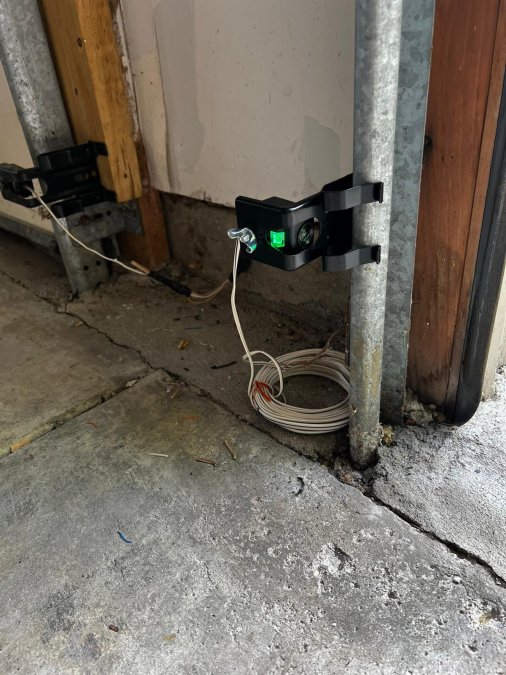 Garage door sensor, left side | 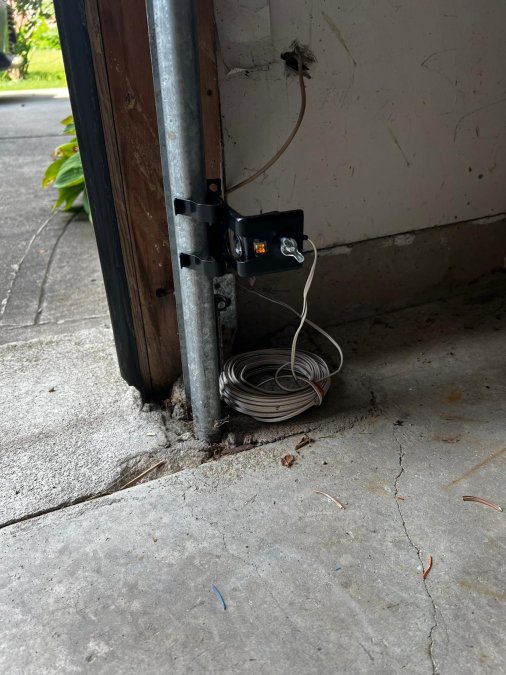 Garage door sensor, right side |
|---|
Here is what usually knocks them out of line:
- Physical contact. A stray ball or a car bumper nudges the bracket a fraction of an inch, and the beam no longer lands on the receiver.
- Vibration. Years of the door cycling loosens the bolts holding the sensor bracket.
- Sunlight. Late afternoon sun can wash out the receiver, so the door closes fine in the morning and refuses at 5 p.m.
The fix is often a two-minute adjustment: loosen the bracket, aim the sensor so its LED glows steady, and tighten it back down. If the light will not hold steady, the sensor has failed and needs replacement.
Garage Door Torsion Spring Replacement in Carmel: Why It Can’t Wait
Garage door torsion spring replacement in Carmel cannot wait because a broken spring puts the entire door’s weight on the opener and cables.
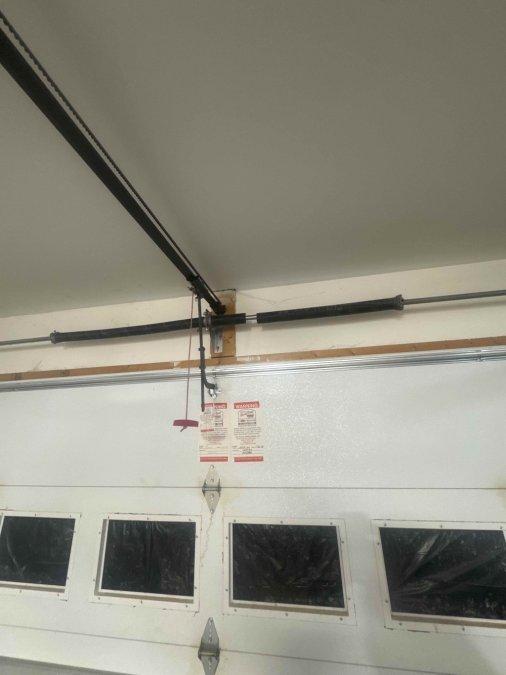
Torsion springs are rated in cycles, and most standard springs are built for roughly 10,000 cycles.
Garage Door Pro keeps springs on every truck, so most spring jobs finish in a single visit rather than a two-trip order-and-return.
Your Garage Door Maintenance Checklist for Fewer Emergency Calls
A garage door maintenance checklist run twice a year prevents most midnight calls. The work takes about 15 minutes and needs no special tools. What most checklists leave out is the judgment call: which findings you can fix yourself, and which mean stop using the door and call a technician tonight.
The Twice-a-Year Walkthrough
Run this in spring and again in late fall, before the temperature swings that stress metal parts.
- Test the auto-reverse by placing a roll of paper towels under the door and closing it. The door should reverse on contact. If it does not, stop and call for service, this is a safety failure, not a nuisance.
- Check the safety sensors: wipe the lenses and confirm both LEDs glow steady. A blinking LED means the door will not close.
- Listen for grinding or popping during a full open and close cycle. Grinding usually means dry or worn rollers; popping often points to a binding track or a failing hinge.
Seasonal Timing for Carmel and Central Indiana
A generic checklist tells you to do this twice a year. A useful one tells you when.
- Late fall (before the first freeze): Lubricate every moving part while it is still warm enough for the lubricant to spread. Cold metal and stiff grease are a bad combination, and a door that strains in December is a door that snaps a spring in January.
- Early spring (after the last freeze): Check for rust on the tracks and hinges from winter road salt tracked in on tires. Salt spray is one of the most overlooked causes of premature roller and hinge failure in this region.
- After any major temperature swing: Metal expands and contracts with the seasons, and spring tension shifts with it. A door that was balanced in October may drift or bind by February.
What You Find and What It Means
What You Find | Likely Cause | What to Do |
|---|---|---|
Door reverses for no reason | Sensor misalignment or dirty lens | Clean and realign sensors yourself |
Loud bang, door will not lift | Broken torsion spring | Stop using the door, call for service |
Grinding noise during travel | Worn rollers or dry hinges | Lubricate; replace rollers if worn |
Door drifts down when released halfway | Spring tension out of balance | Schedule a balance adjustment |
Slack or frayed cable on one side | Cable wear or a failing drum | Stop using the door, call for service |
Door closes but reopens immediately | Sensor obstruction or a mis-set force limit | Clear the path; if it persists, call for service |
Remote works only up close | Weak battery or a failing receiver | Replace the battery; if it persists, call for service |
The One Check Most Homeowners Skip
The balance test is the most important item on the list and the one most people never do. Disconnect the opener with the red release cord, then lift the door by hand to about waist height and let go.
If the balance test fails, do not adjust the springs yourself. Torsion springs are under extreme tension, and adjusting them without the right tools and training is one of the most dangerous jobs in the home.
What to Expect From a 24-Hour Garage Door Repair Visit
A 24-hour garage door repair visit follows a set sequence: diagnose, quote, approve, repair. You should know the total before any work starts.
A dispatcher takes your address and the symptom, then sends a technician. The technician inspects the door, identifies the failure, and gives you a fixed total cost for the repair.
Garage Door Pro handles the parts warranty directly, so a failed component a few months later is our problem, not yours.
How to Vet a 24-Hour Repair Service
Ask four questions before you book any after-hours repair:
- Is the price fixed before work starts? A quote that arrives after the repair is not a quote.
- Does the truck carry parts? Same-day service means little if the spring has to be ordered.
- Who handles the warranty? The company that did the work should stand behind the part.
- Is the business licensed and insured? Ask for the proof, not the promise.
Conclusion
A garage door failure never picks a convenient hour, and the difference between a stressful night and a solved problem comes down to who answers the phone. Garage Door Pro is veteran-owned, BBB-accredited with an A+ rating, and has served Carmel and Central Indiana since 2016. Our dispatch team operates 24/7, our technicians quote a fixed total before starting, and we keep springs on every truck so most repairs finish in one visit.
Frequently Asked Questions
What are the most common signs that my garage door needs emergency repair?
A loud bang from above the door usually means a torsion spring snapped. Other urgent signs include a door stuck half-open, cables hanging loose, the door sitting crooked in the tracks, or the opener running without moving the door. If the door will not close and your house is exposed, that counts as an emergency too. Call a 24-hour residential garage door repair service rather than forcing the door by hand.
How quickly can a technician arrive for residential garage door repair in Carmel?
Response time depends on the time of day and how many calls are already queued, but same-day service is standard for most jobs. Many Carmel homeowners report a technician arriving within about an hour of booking. If you call late at night, expect a realistic window rather than a vague promise, and ask for a callback if the schedule shifts.
Are garage door sensor issues considered an emergency?
Usually not in the life-safety sense, but they can be urgent. A misaligned or dirty safety sensor stops the door from closing, which leaves your home open. Many sensor problems trace back to a bumped bracket, spider webs, or sunlight hitting the lens, and a technician can often realign them in one visit. If the door is stuck open overnight, treat it as a priority call.
What should I look for when hiring a 24-hour garage door repair service in Carmel?
Look for a licensed and insured company with a real local address, clear dispatch hours, and a technician who quotes a fixed total cost before starting work. Ask whether common parts like torsion springs are stocked on the truck, since that determines whether the job finishes in one visit. A written parts warranty and a BBB rating are good signs you are dealing with a stable business.